Pet Cremation in Sydney: A Complete Guide to Your Options, Costs and the Questions to Ask
When we get a puppy or kitten, we often think about walks, toys, training, and all the joy we’ll experience. We don’t really ever think about the day we’ll have to say goodbye. But that day eventually happens to all pet owners, and it can happen without warning.
For many Australians, pets are an important part of family life. According to Animal Medicines Australia’s 2025 pet ownership study 73% of households have pets, and nearly half of that number have dogs.
For those residing in Sydney, cremation is the option many families choose when their pets pass away, and there’s a lot to consider when it comes to options, costs and standards. In this article, we will explain what to do in the initial few hours, the type of cremations you can opt for, the factors that impact the cost, and how to choose a provider that you’ll be able to trust.
What to Do in the First Few Hours After Your Pet Dies
The first few hours can overwhelming and confusing, so it’s best to know what to do in advance.
If your pet dies at home
Place your pet calmly on their side, laying on a towel or blanket with their legs in a natural, resting position. If possible, close their eyes. If you have other pets, allow them to sniff the pet for a few minutes and to say ‘good-bye’. This is often helpful for the ones left behind to properly let go.
Call your veterinarian or a pet cremation facility to arrange a pick-up. Numerous Sydney providers will pick up from your property, thereby relieving you of an emotionally difficult trip.
If your pet is at the vet
If your pet dies in the clinic or after being put to sleep, the veterinarian will typically ask what you would like to do. You can leave it to the clinic to arrange aftercare arrangements with their usual crematorium or take a little time and make arrangements with your own provider.
It’s okay if you need to leave your pet with the clinic for a day while you consider the situation. Clinics will typically have cold storage facilities for this.
Keeping your pet comfortable until collection
If the collection time is more than a few hours away, try to put your pet in a tiled area, an air-conditioned room or a shaded garage. Put a towel under them as this is normal after death and does not indicate any trouble.
If it’s warm out, try to get your pet picked up within 24 hours.
Private, Partitioned or Communal Pet Cremation: What Is the Difference?
After calling a provider, the initial question will be what kind of cremation would you like.
Private (individual) cremation
Your pet is burned in the cremation chamber on its own; therefore, the ashes you receive belong only to your pet and are not mixed with the ashes of other pets. This is what most families prefer, especially when they want to keep the ashes at home or scatter them somewhere special to them.
Partitioned cremation
In this situation, several pets are cremated at the same time, separated by trays or dividers. When the ashes are returned, some mixing may occur. It’s good to inquire how the provider keeps pets separate.
Communal cremation
Here, the pet is left with the pet owner, who will receive the ashes in a single container. They are often diffused in a garden of remembrance by providers. It is the most affordable choice and is suitable for families that do not wish to receive the ashes back.
The three types of pet cremation at a glance
| Type | Ashes returned? | Only your pet’s ashes? | Relative cost | Suits families who |
| Private (individual) | Yes | Yes | Highest | Want to keep or scatter the ashes |
| Partitioned | Yes | Usually, but some mixing is possible | Middle | Want ashes back at a lower price |
| Communal | No | No ashes are returned | Lowest | Don’t need the ashes returned |
How Much Does Pet Cremation Cost in Sydney?
Even while in the throes of emotions, the cost is something that has to be considered. The cost of pet cremation in Sydney is generally based on the weight of the pet and the kind of cremation service that you choose, plus any additional fees.
A general guide would be a few hundred dollars for a cat or small dog, and a little more for a larger dog, for a private cremation in Sydney. Communal cremation is typically more affordable because the remains are not returned.
What affects the price of pet cremation
| Price factor | Why it matters | What to ask |
| Your pet’s weight | Larger pets take more time and energy to cremate | Have a rough weight ready when you call |
| Type of cremation | Private costs more than partitioned or communal | Decide whether you want the ashes back before comparing quotes |
| Collection from home or vet | Some providers include it, others charge per trip | Is pickup included in the quoted price? |
| After-hours or weekend collection | Some providers add a fee outside business hours | Confirm the price before booking a late pickup |
| Urn or container | A simple container is often included, decorative urns cost extra | What do the ashes come home in as standard? |
| Paw prints, fur clippings, certificates | Small add-ons that can add up | Which keepsakes are included, and which are extra? |
Request a quote with the provider and ask what’s included.
How Do You Choose a Pet Cremation Service You Can Trust?
It’s not just about the cost, it’s also about the trust. Unlike other aspects of the pet industry, there isn’t a specific regulator to oversee pet cremation in Australia, so standards will rely on the provider you choose. A few simple questions will help give you a good idea of what to expect.
Questions to ask before you book
If you’re comparing providers for pet cremation in Sydney, ask each one the same handful of questions and note how clearly they answer:
- Is the cremation private, and will my pet be cremated alone?
- How do you track my pet from collection to returning the ashes?
- Do you collect from home and from my vet, and what are your hours?
- How long until the ashes come back, and how are they returned?
- What’s included in the price, and what are the extra costs?
- Can I read reviews from other Sydney families?
A provider that can answer you straight up, without pressuring you to upgrade, is generally a good sign.
Signs of a reputable provider
- Find an ID system (metal tag or numbered card) that remains with your pet from collection to cremation. Good providers will proactively discuss this.
- Voluntary accreditation is given by international organisations like the International Association of Pet Cemeteries and Crematories to some crematoriums. While accreditation is not mandatory in Australia, it doesn’t necessarily mean a provider that lacks accreditation is the wrong one, it just might mean they are not following the same standards as accredited providers.
- There’s a power in clear communication as well. One of the best things about the service for families is that they are kept informed, as soon as their pet is collected until the time of the ashes’ return to them.
Cremation or Burial: What Should NSW Pet Owners Consider?
Some families prefer to bury your dog rather than cremate it, and in many areas of NSW, it is possible to bury a small dog in your own garden, depending on local council regulations.
Consider whether you’re renting or moving houses in the future, the depth of digging, and euthanasia of your pet before making the decision to bury. Even if a shallow grave is dug, the drugs used in euthanising can still be left in the remains if ever the grave is disturbed.
Cremation and home burial compared
| Consideration | Cremation | Home burial |
| Moving house | The ashes move with you | The grave stays with the property |
| Council rules | No council approval needed | Check your local council’s rules first |
| Space and soil | Not a factor | Needs a deep hole away from water, pipes and cables |
| Euthanised pets | No extra risk | Deep burial needed to protect wildlife |
| Cost | A few hundred dollars for a private cremation | Low cost if you dig yourself |
| Ways to remember | Urn, keepsake jewellery or scattering | A garden marker or a plant |
What Paperwork Do NSW Pet Owners Need to Finish?
NSW owners are required to notify their local council within 28 days after the death of a registered cat or dog, and within a shorter time for restricted and declared dangerous dogs, under the Companion Animals Act 1998.
You can inform the council which will add your pet to the NSW Pet Registry record. Councils will typically take an online application and/or an email containing the microchip and death date of your pet, and some will require confirmation from a vet if your pet has been euthanized.
Ways to Remember Your Pet
Aftercare is also about memory. Many crematoriums provide keepsakes as well as ashes and there are some simple ideas that can be created at home.
Keepsakes from your cremation provider
Common options are paw print impressions, a lock of fur, engraved urns, and small pieces of jewellery containing a pinch of ashes. Inquire about them on booking, as paw prints and fur clippings are to be removed prior to cremation.
Photos and memories at home
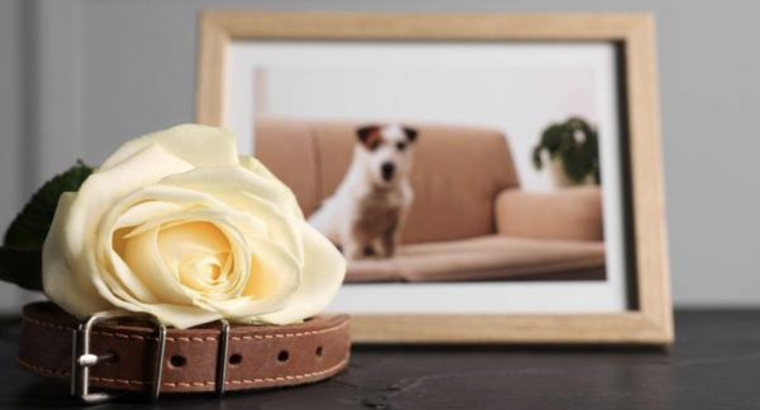
Photos often become the most valuable memento. For those who are elderly or ill, it may be worth booking one before the time passes; you can search for pet photographers listed across Australia and find one local to you. A framed print, a small box with their collar and tag, or a tree in the garden gives the family a place to channel their affection.
Helping Children and Other Pets Through the Loss
Many kids experience death for the first time when they lose a pet. Phrases such as “sleep” or “went to sleep” are more effective than phrases like “put to sleep” or “went away”, which may be confusing to younger children and can cause anxiety during bedtime.
Allowing children to select an urn, draw a picture for the memory box, or plant something in the garden provides a way for them to be involved in saying goodbye. Pets in the household may be somewhat disturbed for several weeks after a dog is born, but maintaining a normal daily schedule and offering a little extra attention is often enough to help them settle in with the pup.
Pet Cremation Questions Sydney Owners Often Ask
How long does it take to get the ashes back?
This varies by provider and type of cremation. Many will return ashes, usually within a few days to about two weeks, and will do so to you or they will pick them up – be sure to ask the time and method of return when you make your appointment.
Can I be there for the cremation?
A few crematoriums allow families to attend and visit the body before the cremation, and some even permit families to attend for a brief farewell. This is available subject to availability; please check if this is important to you.
Can rabbits, birds and other small pets be cremated?
Yes. Many will have the pet burned and costs may be more affordable with smaller pets, as it is calculated on a weight basis.
Does pet insurance cover cremation?
Some policies include a benefit towards euthanasia or cremation costs, while others don’t. Review your product disclosure statement or contact your insurance provider prior to booking and retain the receipt in the event that you can claim.
Can I keep my pet at home for a while before cremation?
Yes, for a little while. Keep the pet cool, collect within about a day, or sooner in the hot weather. Your vet or cremation company can keep your pet in a cool room until you can be ready.
A Calm Plan Now Makes the Hardest Day Easier
Whether you’re prepared or not, the loss of a pet is a painful experience, but a plan reduces the stress. Decide between private and communal cremation, have a general idea of the cost of cremation and keep the contact number of a provider that you know and trust.
Ask your veterinarian how they deal with aftercare and keep a pet cremation provider number in your cell phone. When the day arrives, you’ll be able to pay attention to your pet, not to your cell phone.
Related posts:




You must be logged in to post a comment.